Home / Automated Contract Ledgers for AI Agents / Chapter 14 · Gambling lens
華語 · English
Welcome — download to study · PDF
14. Gambling lens: on-chain fairness, settle rails, compliance (high level)
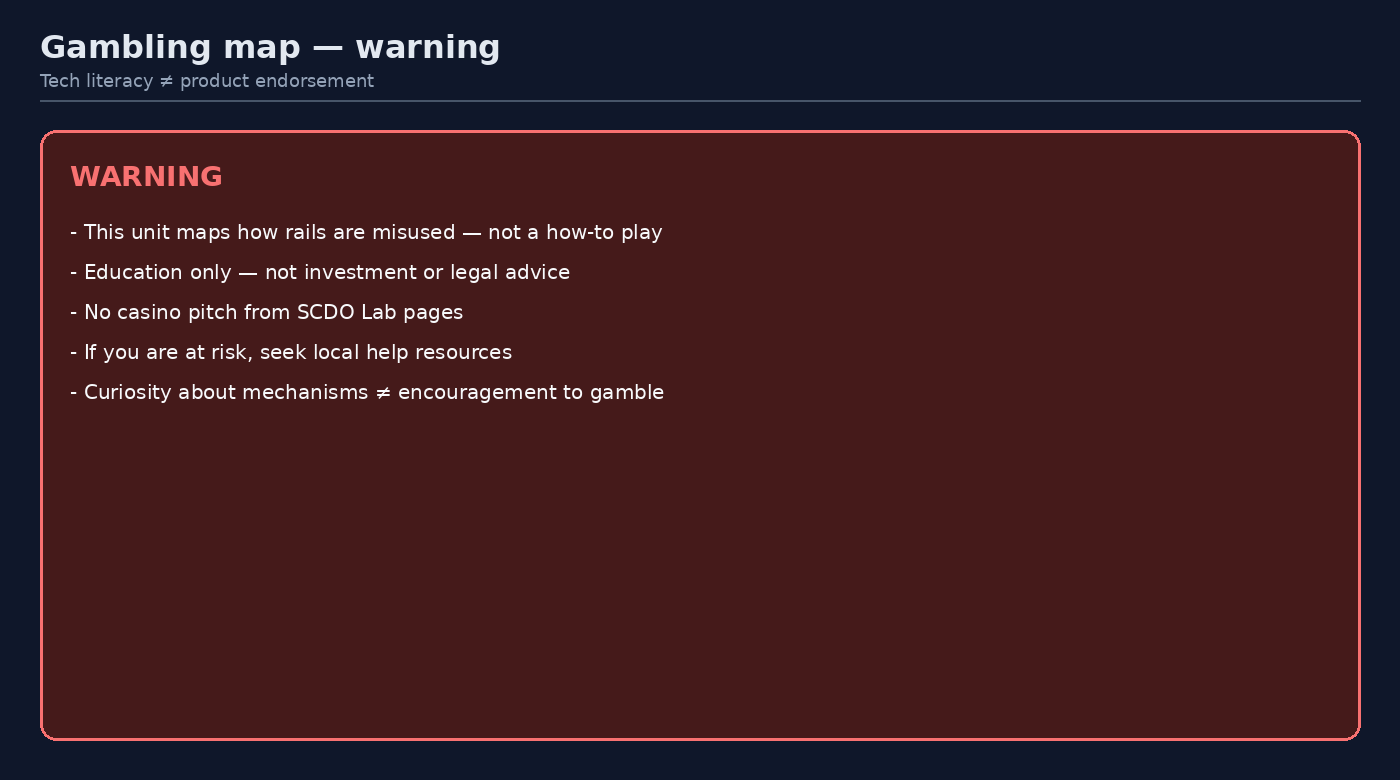
SCDO Lab · educational. Explains verifiable randomness/settlement ideas — not a gambling tutorial, not a casino funnel.
Why this chapter?
Chains often market “provably fair.” Newcomers must separate: math commitment ≠ legal to play ≠ honest house. This chapter is a map and red lines—not betting strategy.
What “on-chain fairness” claims
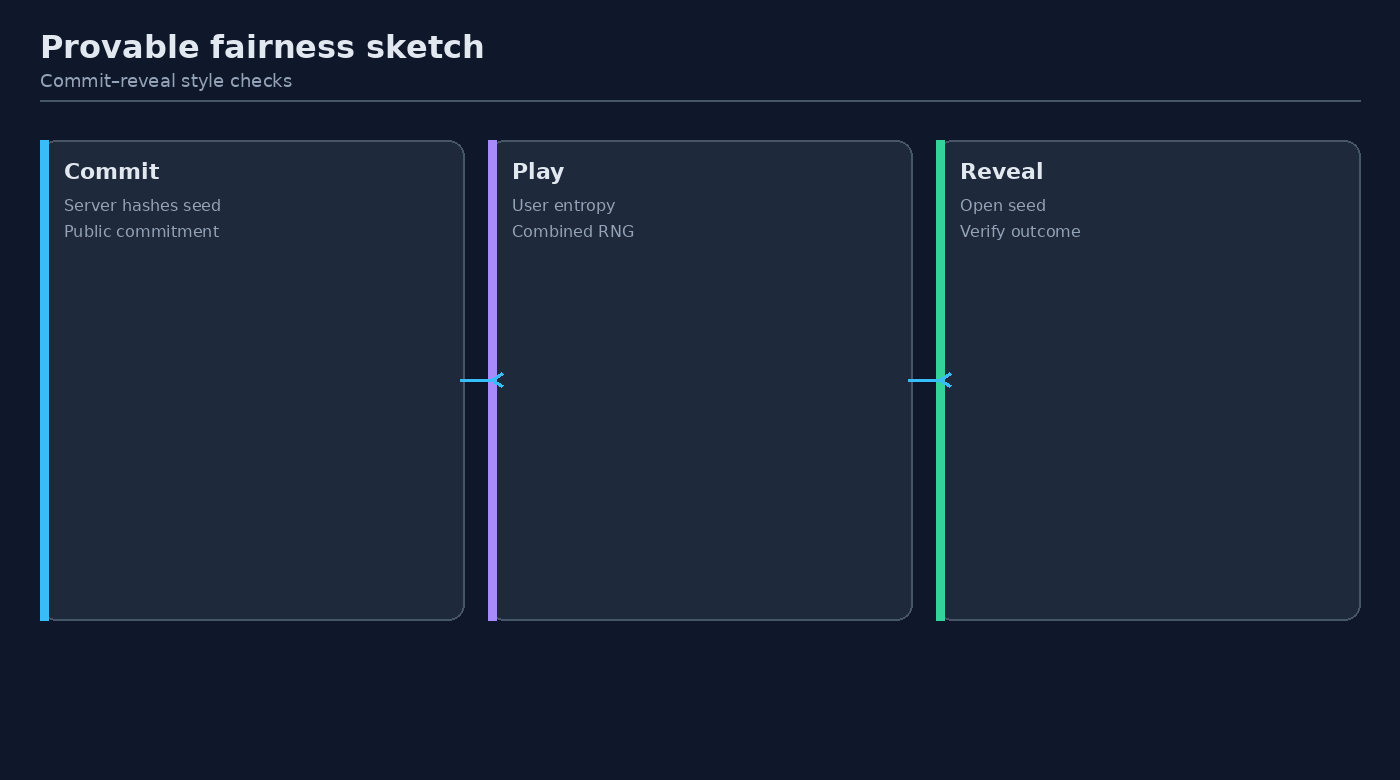
Common pattern: commit hash → reveal → verify randomness/result. It reduces silent post-hoc edits; it does not erase backdoors, oracle games, frontend swaps, withdrawal refusals, or legal risk.
Settle rails
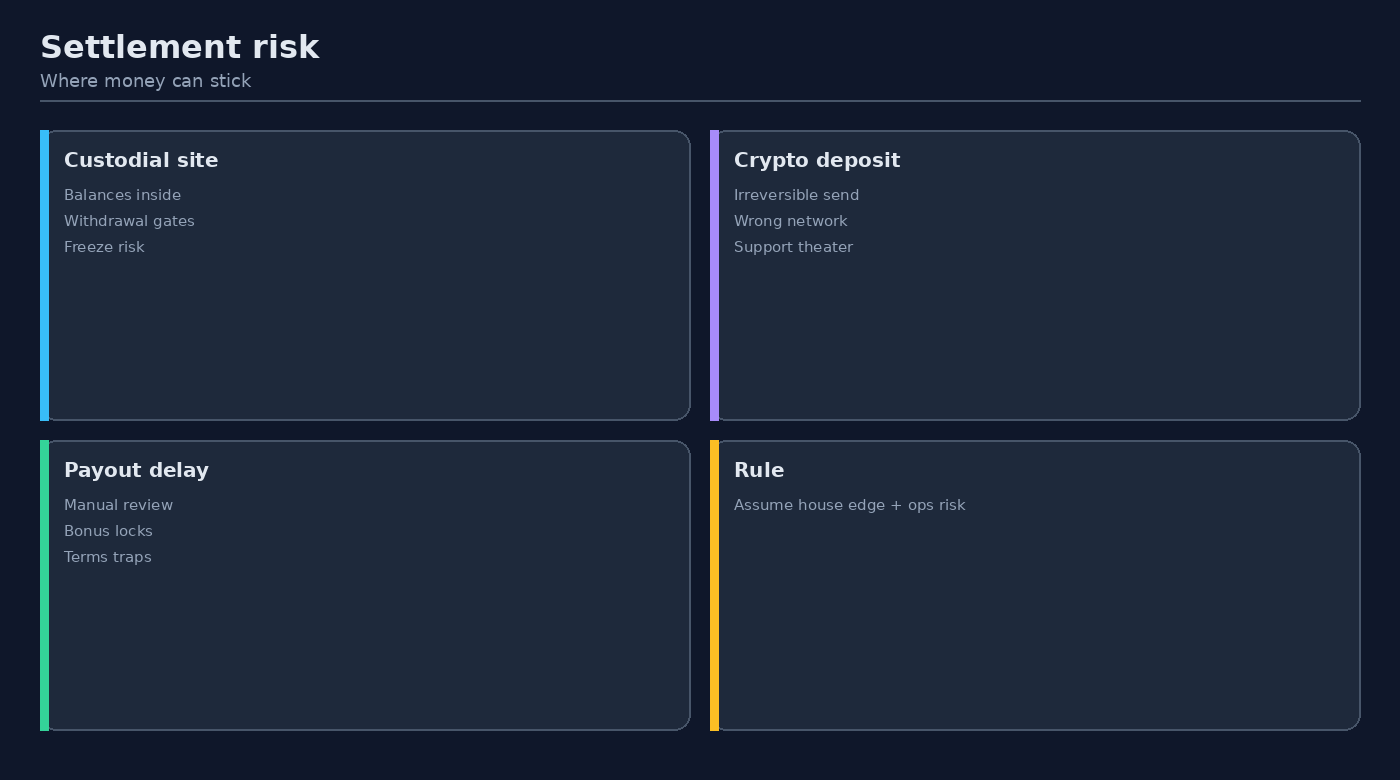
Bets, payouts, escrow, bridges add counterparties. Read them as high-risk settlement (same lens as Ch. 13): caps, audits, pause switches, custody.
Licensing (AU high-level sketch)
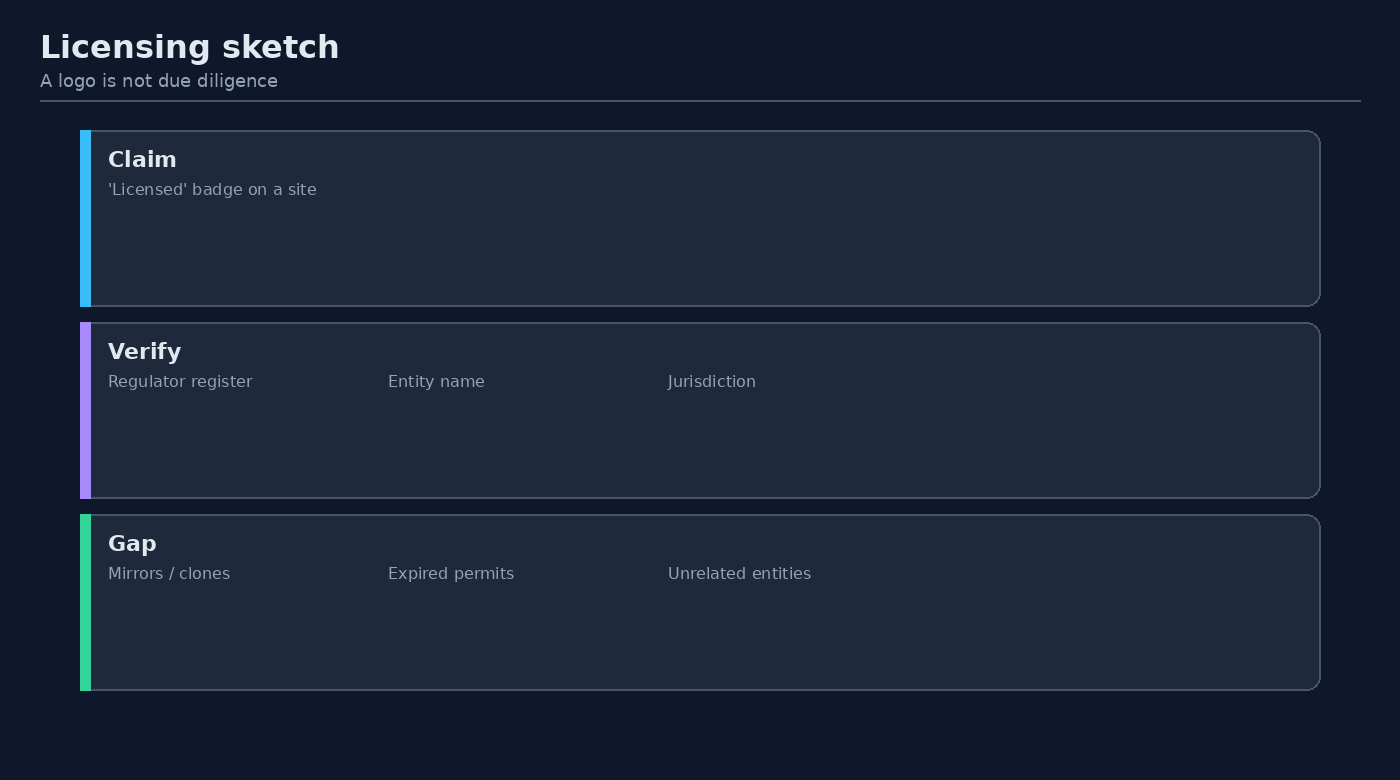
Crypto exchange registration and gambling licenses are different regimes. SCDO’s public AUSTRAC DCE / AFCA materials are exchange-operator disclosure context — not “casino license, gamble freely.” Local gambling ads/age rules can be strict.
SCDO games / ledger angle (restrained)
If the site shows game-facing experiments or ledger features, read them as verifiable-record / permission demos under local law. Agent Ledger is agent bookkeeping—not a casino backend.
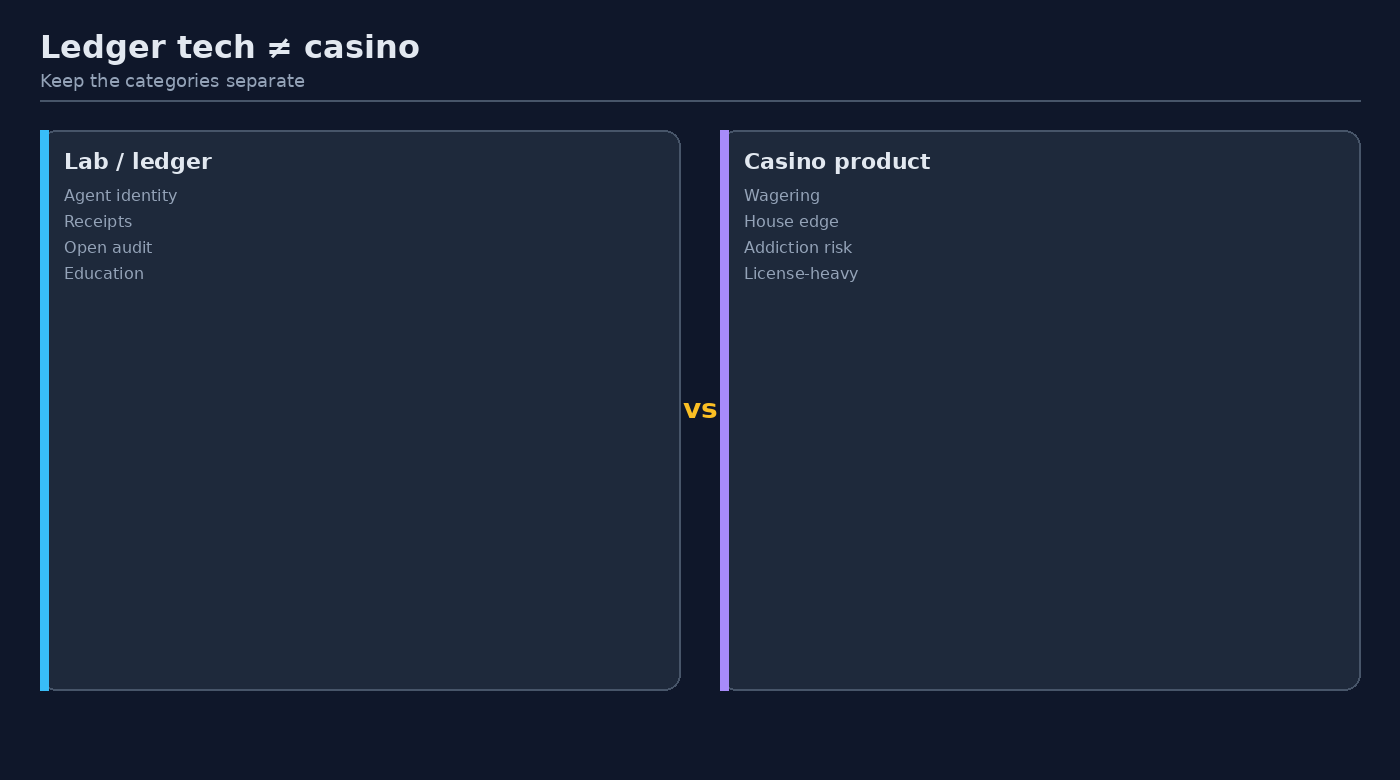
Red-line list
- Do not teach gambling or funnel players to casinos.
- Do not present tech demos as playable partners.
- No evasion guides.
- Minors / banned jurisdictions: leave.
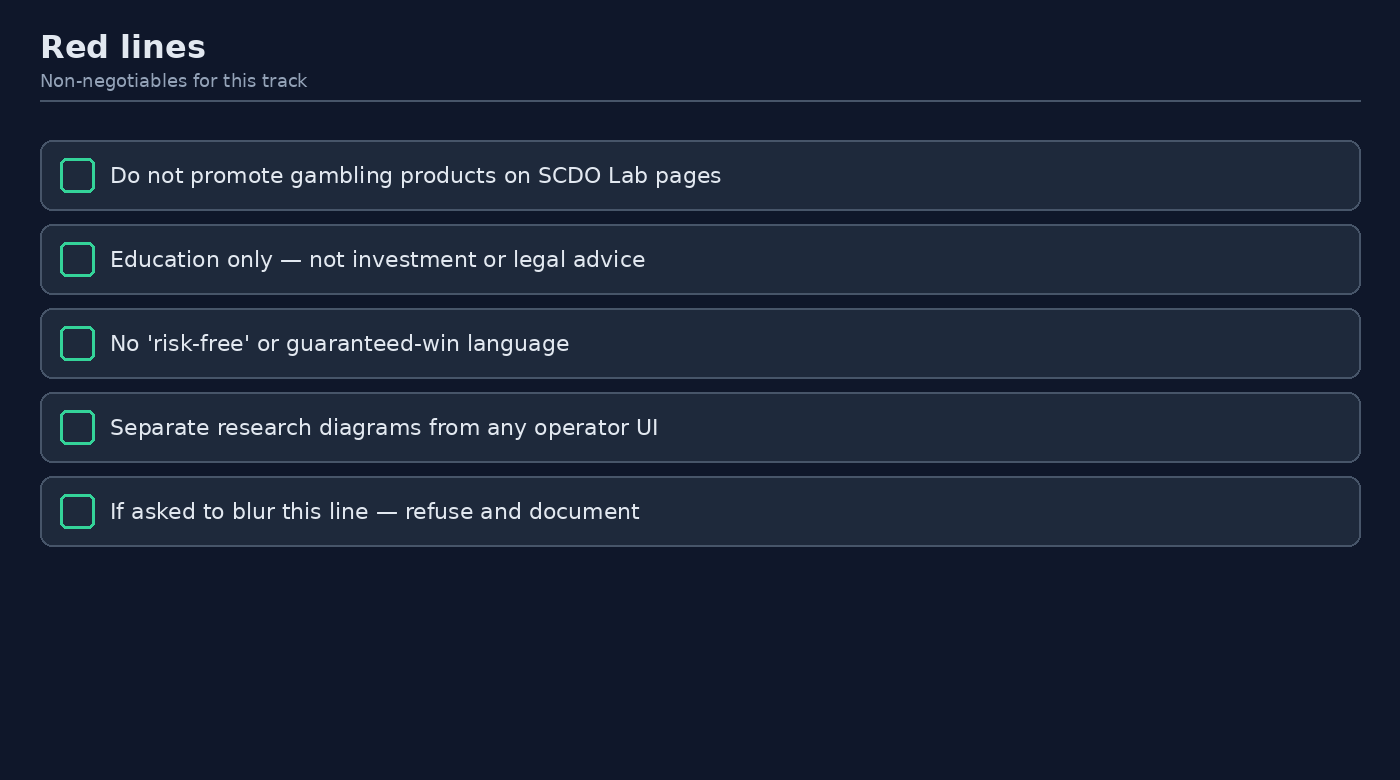
Chapter wrap
This chapter de-noises: unpack fairness marketing, treat settlement as high risk, localize compliance, and refuse casino ads dressed as SCDO tech. Return to verification and safety habits.
(Chapter 14 · Gambling lens · SCDO Lab)