SCDO Laboratory · TECH PR
UNIT 10
Series · Automated Contract Ledgers for AI Agents · Next-Gen Smart Payments
SCDO Five-Chain: Agent Contract Ledgers
Shard0 Ethash · Classic ZPoW · Agent Ledger · Author Ying Willam Zhang
10. SCDO: sharded PoW, sites, and how newcomers try it
SCDO Lab · Web3 Primer for Newcomers v2 · English
Chinese (Traditional):10-closing.md
Chapters 1–9 gave a general map; this chapter focuses on SCDO: what it is, how five chains share work, where the site/explorer/wallet/Agent Ledger live, how to read compliance, and how to try small steps.
Education only — not investment, legal, or tax advice.
Learning goals
After this chapter you should be able to:
- Explain SCDO’s five peer chains in one sentence (Classic shards + Shard0 EVM).
- Tell ZPoW from Ethash, and
1S…addresses from0x…. - Find primary sources: official site, explorer, papers, compliance, this primer.
- State what Agent Ledger answers (who signed; can we check the trail)—and what it is not.
- Try a least-privilege, dust-size path and reread Chapter 9 safety habits.
A short history: from shard research to the 2026 surface
Earlier public technical narrative (around the 2020 whitepaper lineage) framed SCDO as a multi-shard mainnet secured by scientific-computation-style proof-of-work (ZPoW), with STEM-style Layer-2 / scaling designs. By 2026, the checkable product surface looks more like:
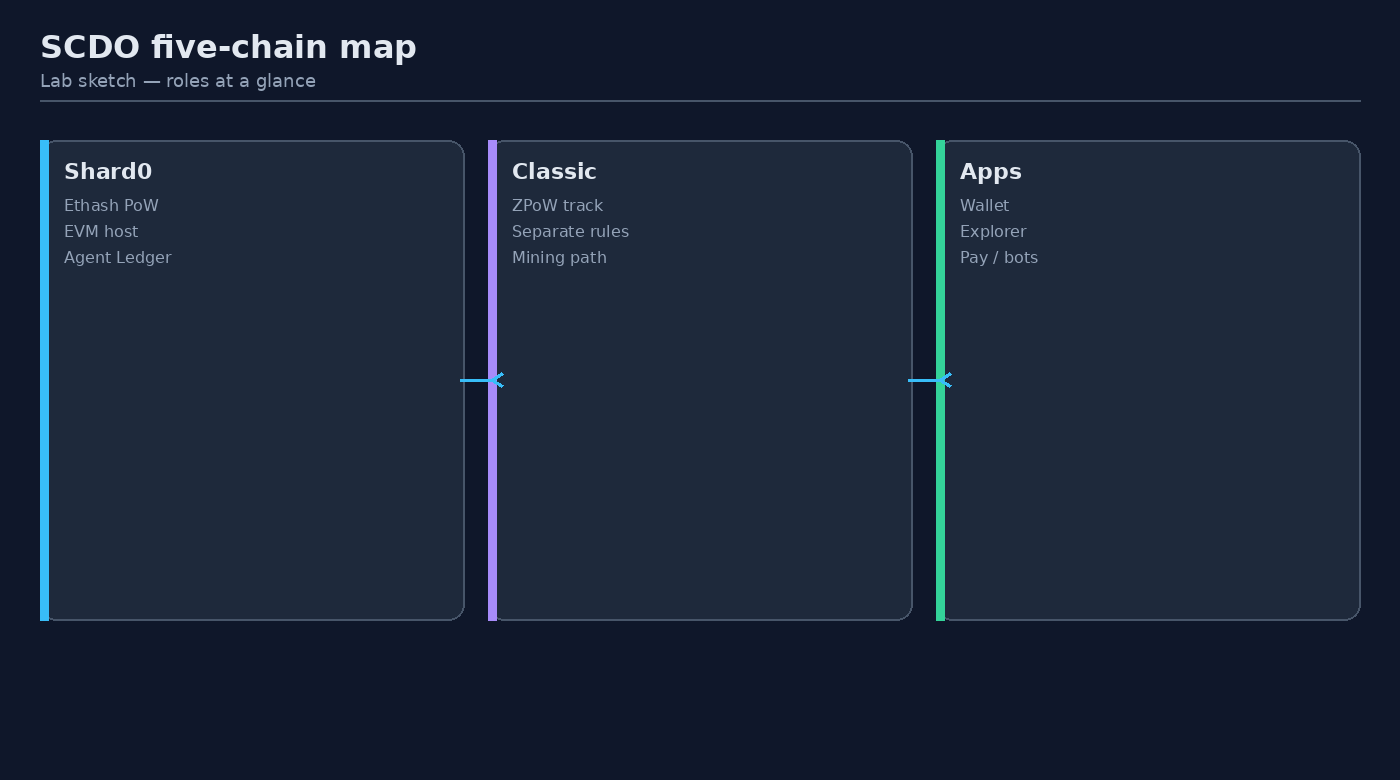
- Classic Shards 1–4: continuing go-scdo / ZPoW core; addresses often
1S…. - Shard0 EVM: a peer Ethash PoW contract chain (chainId 5680) for wallets, MetaMask-class tools, ERC contracts, and Agent Ledger anchors.
- STEM: mostly retained as historical / research design in papers; everyday scaling intuition is Classic sharding + Shard0 EVM + external settlement rails (e.g. agent micropayments).
One-line mnemonic: Classic keeps scientific-style ZPoW shards; Shard0 uses Ethash for EVM and agent bookkeeping. Peer surfaces—not a cartoon “main vs deprecated” story.
What is SCDO? (educational definition)
SCDO is a peer-to-peer public blockchain system for decentralized value transfer, with public sites and tools maintained by SCDO Laboratory (operator 9Y9 PTY LTD). Public authorship commonly cites Ying Willam Zhang.
| Chain | Consensus / client | Role (educational) |
|---|---|---|
| Shard0 EVM | Ethash PoW · core-geth family · chainId 5680 | Contracts, Agent Ledger anchors, Ethereum-like tooling |
| Classic Shards 1–4 | ZPoW · go-scdo | Original sharded core; addresses often 1S… |
Public materials also sketch Shard0 block-time / reward rules in the Ethash family and Classic in-shard confirmation with cross-shard alignment (often Debt in docs). Numbers move—prefer primary sources over frozen screenshots.
Shards and PoW: two tracks
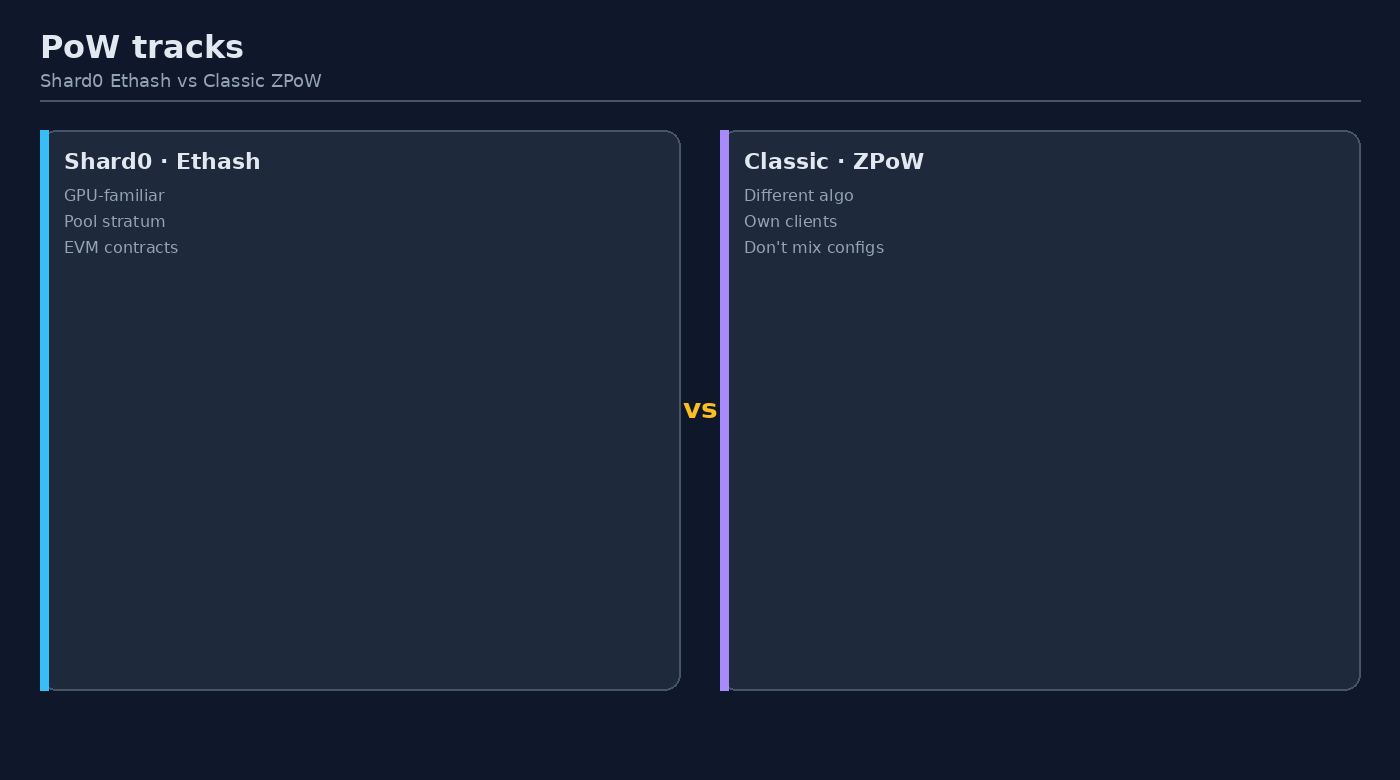
Classic: shards + ZPoW
- Accounts/nodes partition across Shards 1–4; local txs confirm in-shard; cross-shard needs alignment (e.g. Debt).
- ZPoW targets verifiable scientific-style work (CPU-friendlier design goals vs pure hash races); GPUs remain common in 2026 practice; wallet CPU bookkeeping may exist—per then-current docs.
- Classic
1S…accounts are mainly a SCDO Wallet surface; do not assume every Ethereum wallet “just works.”
Shard0: Ethash EVM
- Pre-merge Ethereum-style Ethash epochs (public notes often cite 30,000-block epochs; not etchash); RPC/explorers follow the official site and scdoscan.io.
- Fits MetaMask-class tools, ERC-20/721, and agent identity (e.g. ERC-8004).
- Agent Ledger anchors signed task/heartbeat digests on Shard0.
Why two tracks? (engineering intuition)
| Need | Closer track (intuition) |
|---|---|
| Familiar EVM contracts, explorers, extensions | Shard0 Ethash |
| Original shard / ZPoW research and Classic asset paths | Classic S1–4 |
| AI agent bookkeeping and Ethereum-like identity | Often Shard0 + Agent Ledger |
| Scientific PoW narrative and in-shard throughput | Classic |
Common newcomer mistake: calling one chain “the only mainnet.” Prefer: five peers, different tools and address rules—read first, then act.
Site, explorer, transparency
| Entry | Use |
|---|---|
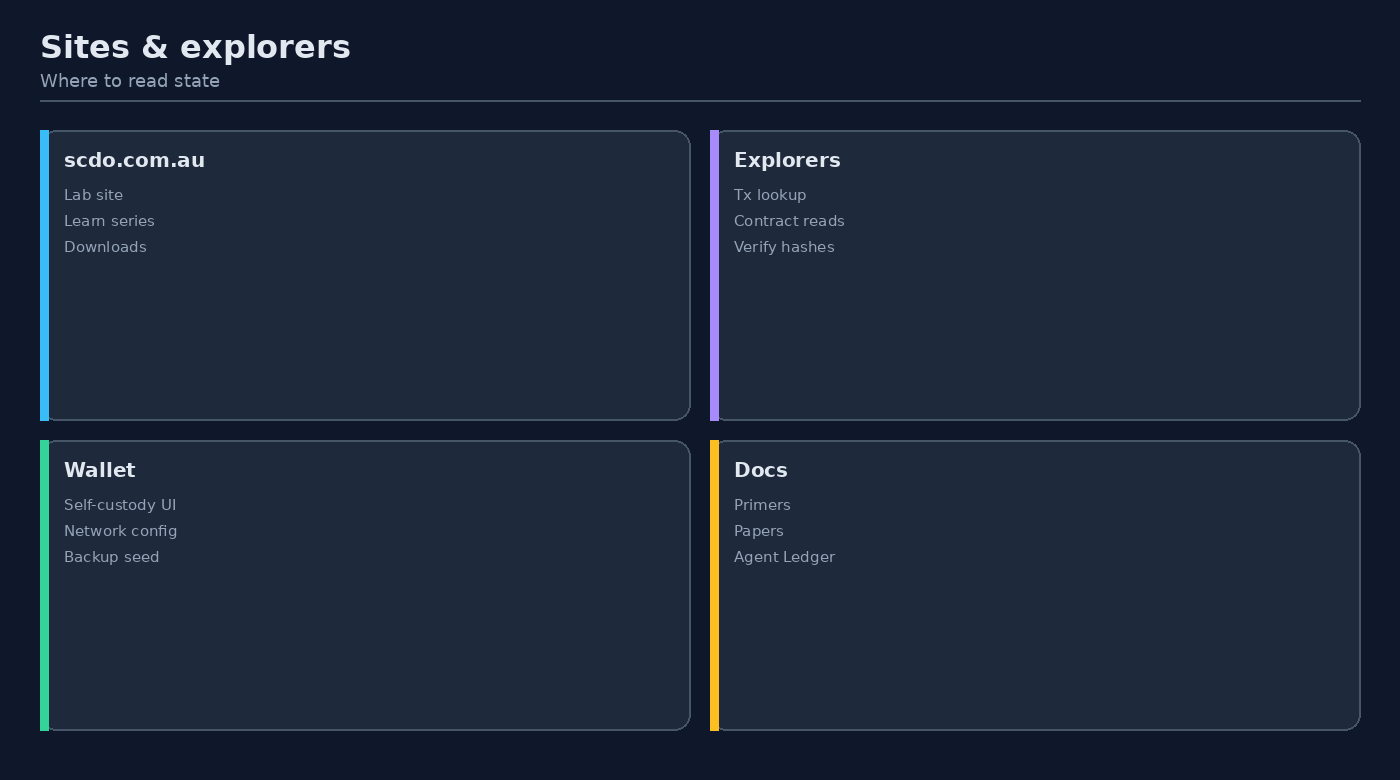
| scdo.com.au | Home: wallet, Agent Ledger, papers, compliance, learn |
| scdoscan.io | Explorer and transparency-related pages |
/papers/ |
Technical papers / 2026 architecture notes |
/learn/web3/en/ |
This English primer; Chinese at /learn/web3/ |
/compliance.html |
Compliance disclosures (as then published) |
Prefer primary sources over second-hand “it’s over” screenshots.
Wallet (SCDO Wallet)
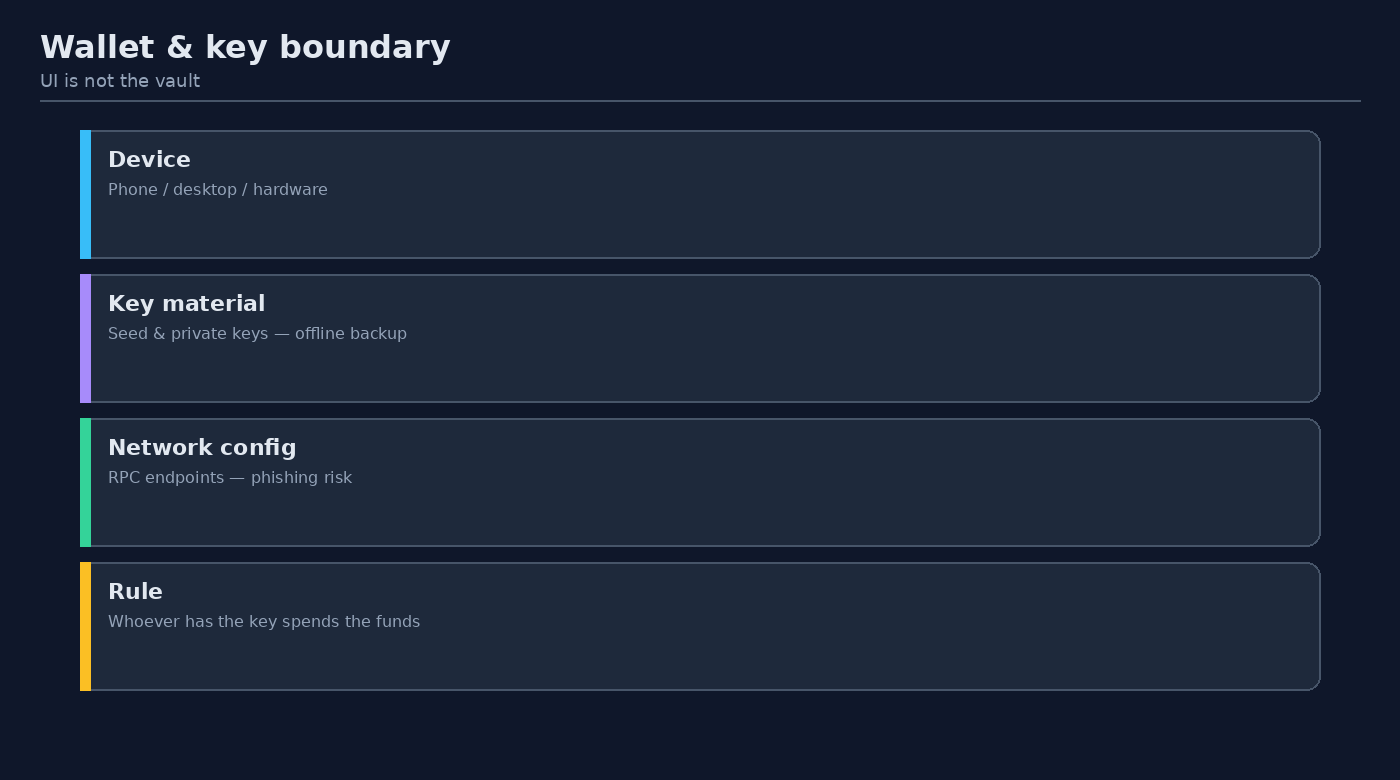
SCDO Wallet targets a five-chain UI: Classic 1S… and Shard0 0x…; keys stay local per then-current product docs. Headless Linux agents exist for server bookkeeping.
Newcomer rules (same as Ch. 9): tiny amounts first; never paste seeds into chat/cloud notes/screenshots; download only from official paths; know which chain and network ID you are on (Shard0 public materials: chainId 5680).
Agent Ledger: verifiable agent bookkeeping
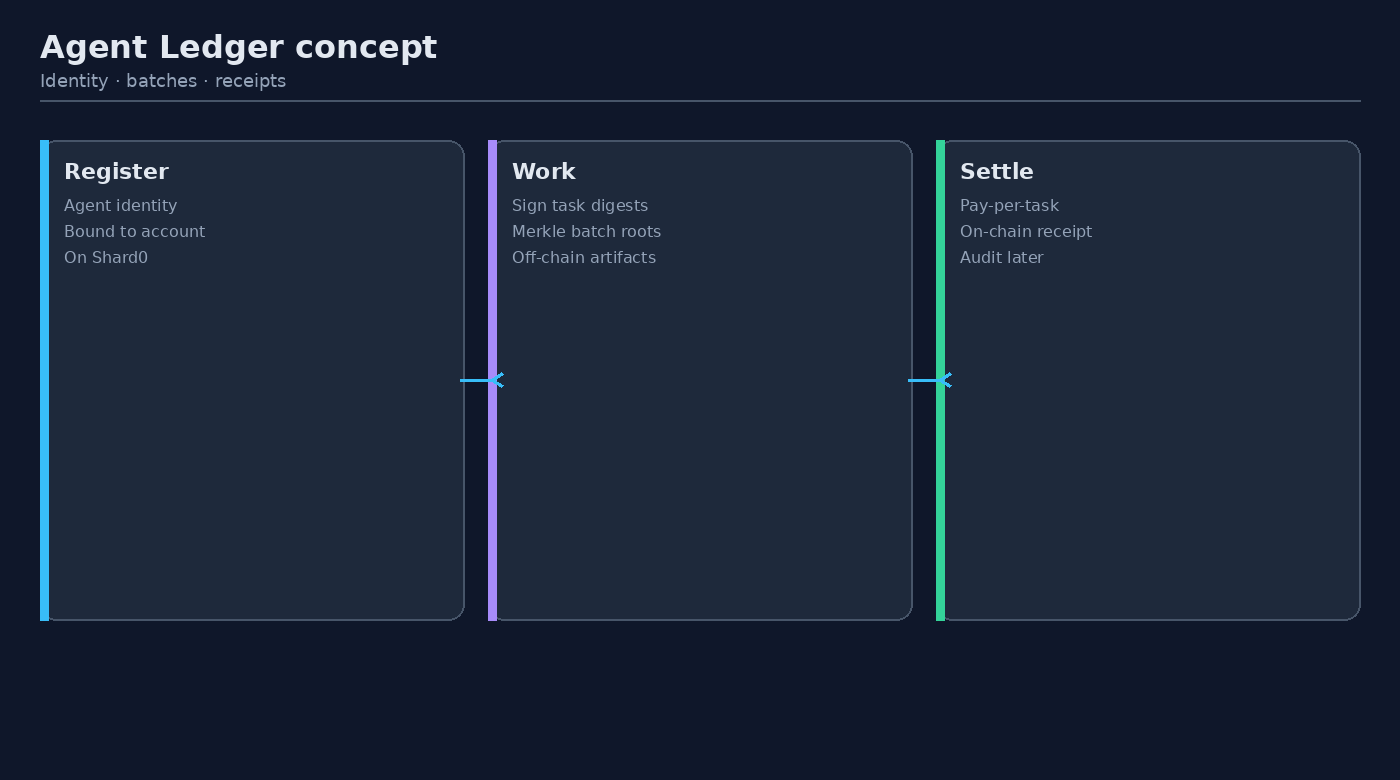
Agent Ledger lets each AI agent hold its own key, sign tasks/heartbeats, and anchor digests on Shard0; optional ERC-8004 identity. Entry: scdo.com.au/agent-ledger/.
It answers who signed and can we check the trail—not “auto money printer,” and not a casino backend. Payments (x402 / HTTP 402, ~1¢ settle nests) are Chapters 12–13.
Everyday analogy
Think badge + time-clock + public attendance digest: the badge is the agent key/identity; clock-ins are signed tasks/heartbeats; the wall digest is a Merkle/contract anchor on Shard0 so others can check that a batch existed—not that you will profit.
Compliance context (high level, not legal advice)
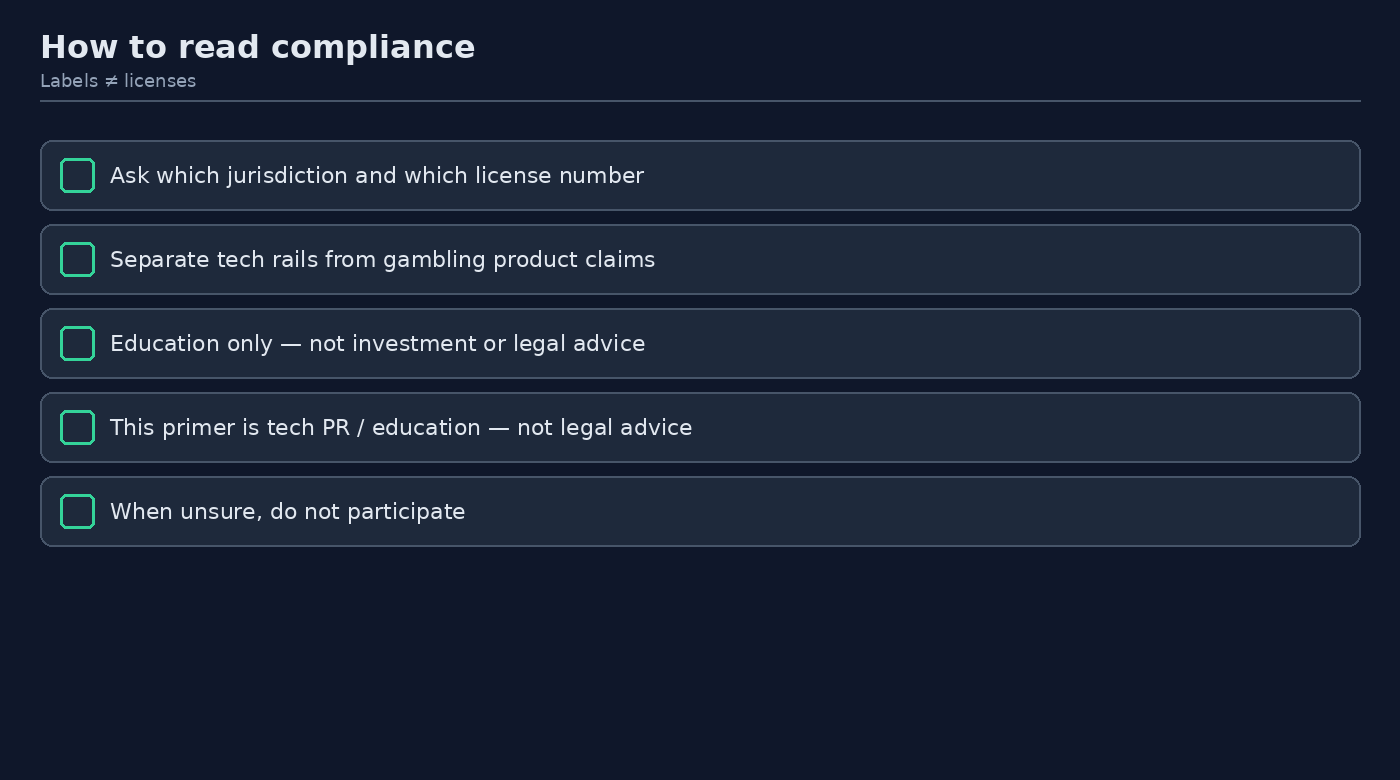
Public materials for operator 9Y9 PTY LTD include:
- AUSTRAC Digital Currency Exchange registration example: DCE100714503-001 (verify on AUSTRAC’s public register; registration ≠ endorsement).
- AFCA external dispute resolution member example: 124589 (contact the operator first; AFCA may be available if unresolved).
Details: scdo.com.au/compliance.html and regulator pages. This book does not teach evasion and does not turn registration into a government yield guarantee.
How newcomers try SCDO (no large size)
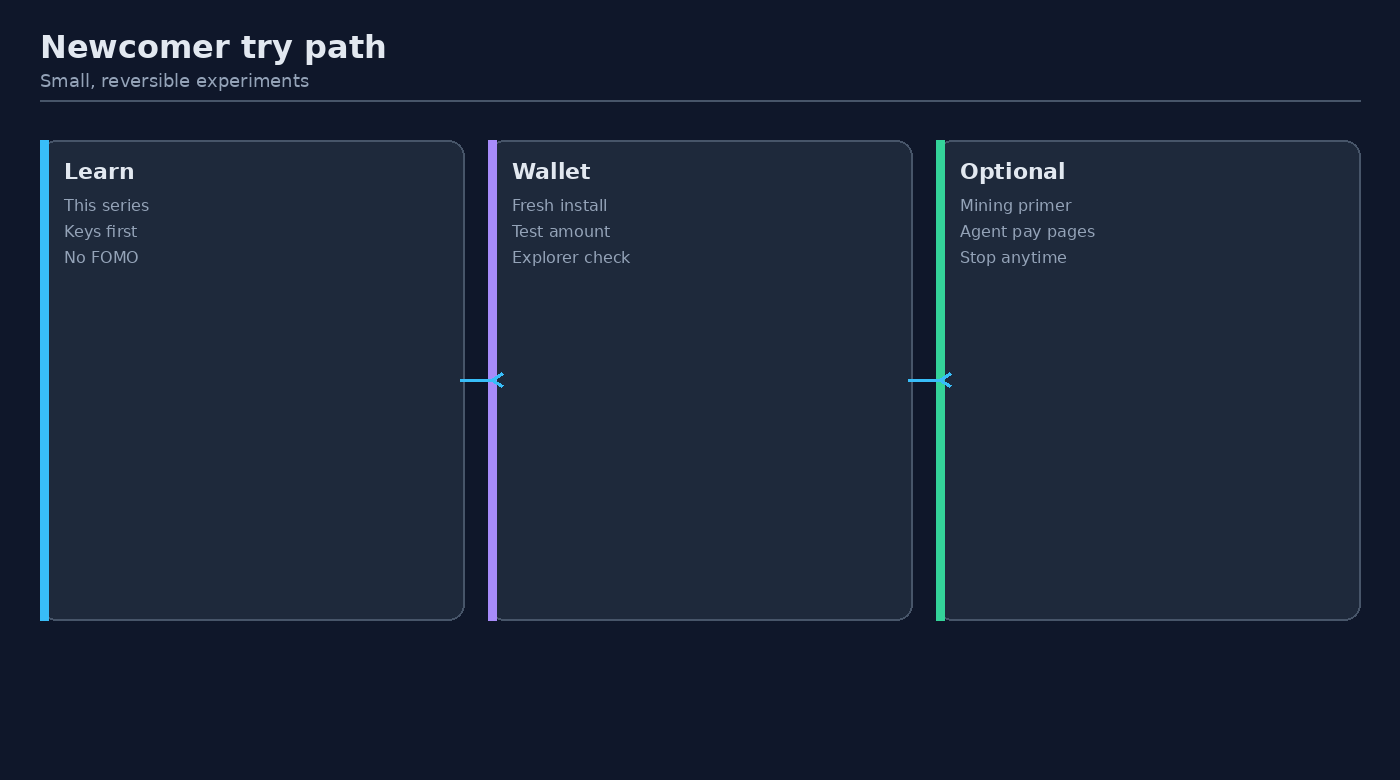
- Read Wallet / Agent Ledger / Papers pages on the official site.
- Use the explorer for public Shard0/Classic info.
- If you create a wallet: least privilege, dust-size tests only where lawful.
- For agents: understand signing/heartbeats before payment pilots.
- Reread Chapter 9; walk away from “guaranteed daily profit” scripts.
Mini case (teaching fiction, not a return promise)
Ann only wants to understand the five chains. She confirms public Shard0 blocks in an explorer, reads Agent Ledger docs on the official site, does not buy a rack of hardware first, and does not send her seed to a group chat. Only later—if lawful—she tries a dust-size transfer. That is the intended rhythm: read → read-only verify → minimal action.
Link to earlier chapters
| Ch. | General skill | On SCDO |
|---|---|---|
| 1 Bitcoin | Ledgers, incentives, keys | Compare PoW incentives and self-custody |
| 2–3 Web3 / L1s | Wallet entry, chain maps | Read Shard0 as an EVM tool surface |
| 4 L2 / shards | Scaling intuition | Compare Classic shards + external settle |
| 5–8 DeFi–GameFi | Risk and scene limits | Do not treat this chapter as a hype list |
| 9 Security | Phishing, least privilege | Required before any trial |
Mining, bot commerce, payments, and the fairness/compliance lens follow.
Short quiz
- What consensus does Shard0 use vs Classic? How do addresses differ?
- Which two questions does Agent Ledger primarily answer? Does it guarantee profit?
- Does AUSTRAC DCE registration equal investment endorsement? Why?
- Is “buy miners first” or “read-only site + explorer first” the better first step?
Sketch answers: (1) Ethash vs ZPoW; 0x… vs 1S…. (2) Who signed; can we check—no profit guarantee. (3) No. (4) Read-only first.
Takeaways
- SCDO = Classic shards (ZPoW) + Shard0 EVM (Ethash) + official toolchain + verifiable compliance disclosure.
- Five peers; separate chains, addresses, wallet paths.
- Agent Ledger = verifiable agent books, not a printer.
- Primary sources; small steps; security first.
- Education only — not investment advice.
Disclaimer
Educational original rewrite — not investment, legal, or tax advice. Assets can go to zero. Obey local law. Third-party names are explanatory, not endorsements. Products follow then-current official wording.
Chapter wrap
Next: Ch. 11 Mining, Ch. 12 Bots×chain, Ch. 13 Payments, Ch. 14 Provable-fairness / tech red lines (educational).
(Chapter 10 · SCDO · SCDO Lab)