SCDO Laboratory · TECH PR
UNIT 14
Series · Automated Contract Ledgers for AI Agents · Next-Gen Smart Payments
Provable Fairness: Tech Red Lines
Research lens: verifiable records — not casino PR · Author Ying Willam Zhang
14. Provable fairness: gambling-tech red lines (educational)
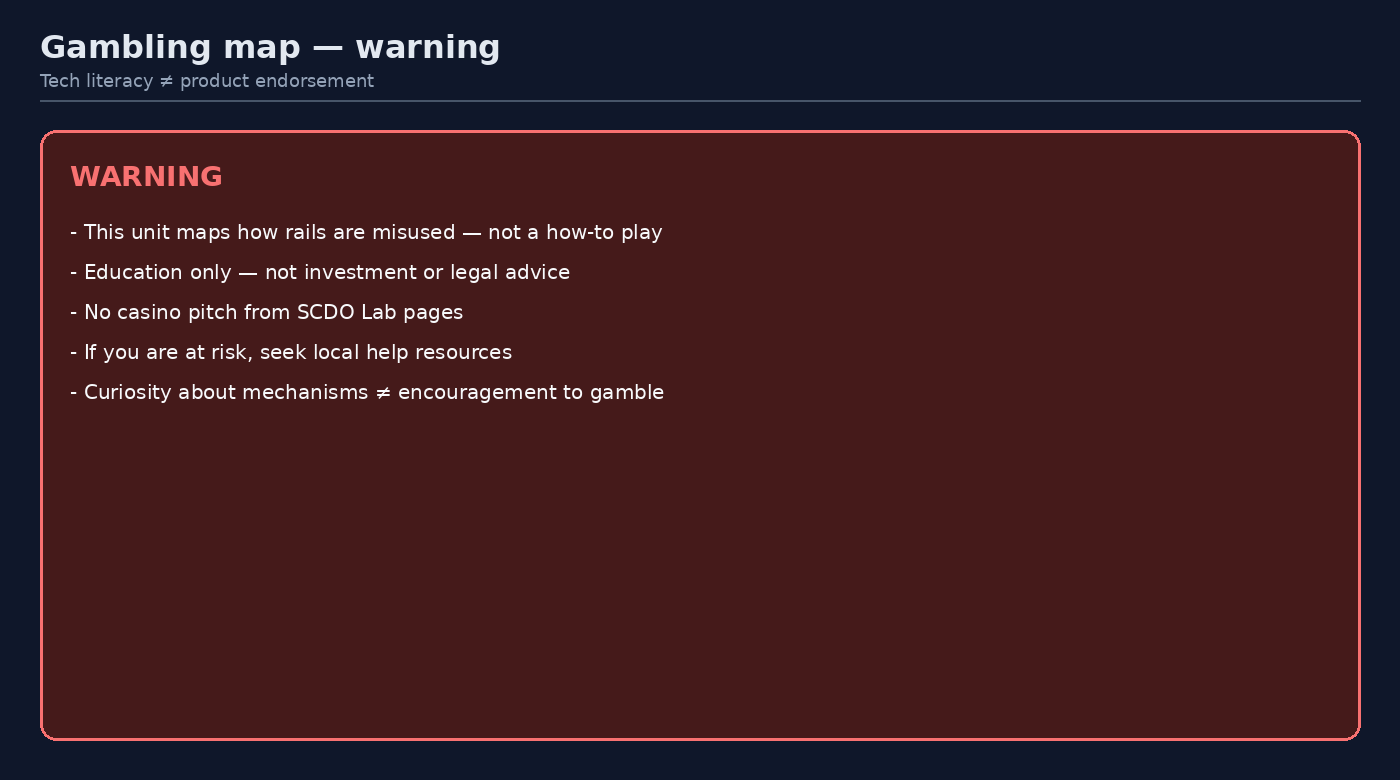
SCDO Lab · educational. Explains verifiable randomness/settlement ideas — not a gambling tutorial, not a casino funnel, not a betting strategy.
Series mini-book title also reads “Provable Fairness: Tech Red Lines” — the point is red lines and unpacking marketing, not promoting gambling.
Learning goals
- Separate three claims: math commitment ≠ legal to play ≠ honest house.
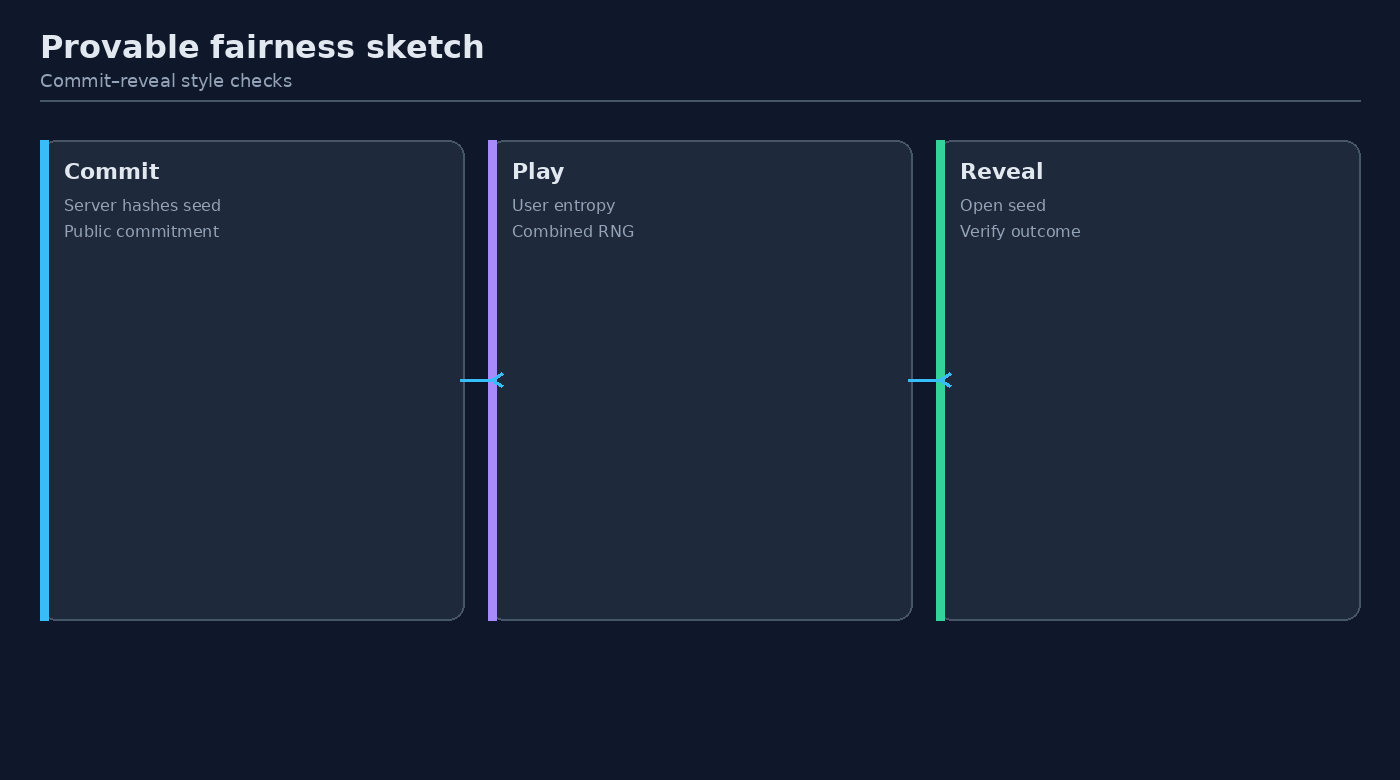
- Describe commit-hash → reveal → verify: what it reduces, what it does not erase.
- Read “settle rails” with the Chapter 13 lens: caps, audits, pause switches, custody.
- Understand exchange registration vs gambling licenses; AUSTRAC DCE ≠ casino license.
- Memorize red lines: no teaching, no funnels, no evasion, minors/banned regions leave.
Why this chapter?
Chains often market “provably fair.” Newcomers need a map and red lines—not betting tips. The job is de-noising: turn slogans into testable engineering claims and mark legal/counterparty risk.
One-line history
“Provably fair” predates most chain marketing: commitment schemes make results checkable after reveal. Putting steps on a public ledger changes the medium—not automatically the incentives or the law.
What “on-chain fairness” claims
Common pattern: commit hash → reveal → verify randomness/result. It reduces silent post-hoc edits; it does not erase backdoors and upgradeable proxies, oracle/entropy games, frontend swaps (UI ≠ contract parameters), withdrawal refusals/freezes/delays, licensing problems, or social engineering.
Honest reading table
| Claim | More honest read |
|---|---|
| “On-chain, so fair” | Checkable ≠ unable to cheat |
| “Open source, so safe” | Openness lowers secrecy; not “audited and bug-free” |
| “RNG is verifiable” | You verify protocol steps, not expected value |
| “Funds in a contract” | Who can pause, upgrade, or multisig-exit? |
Settle rails
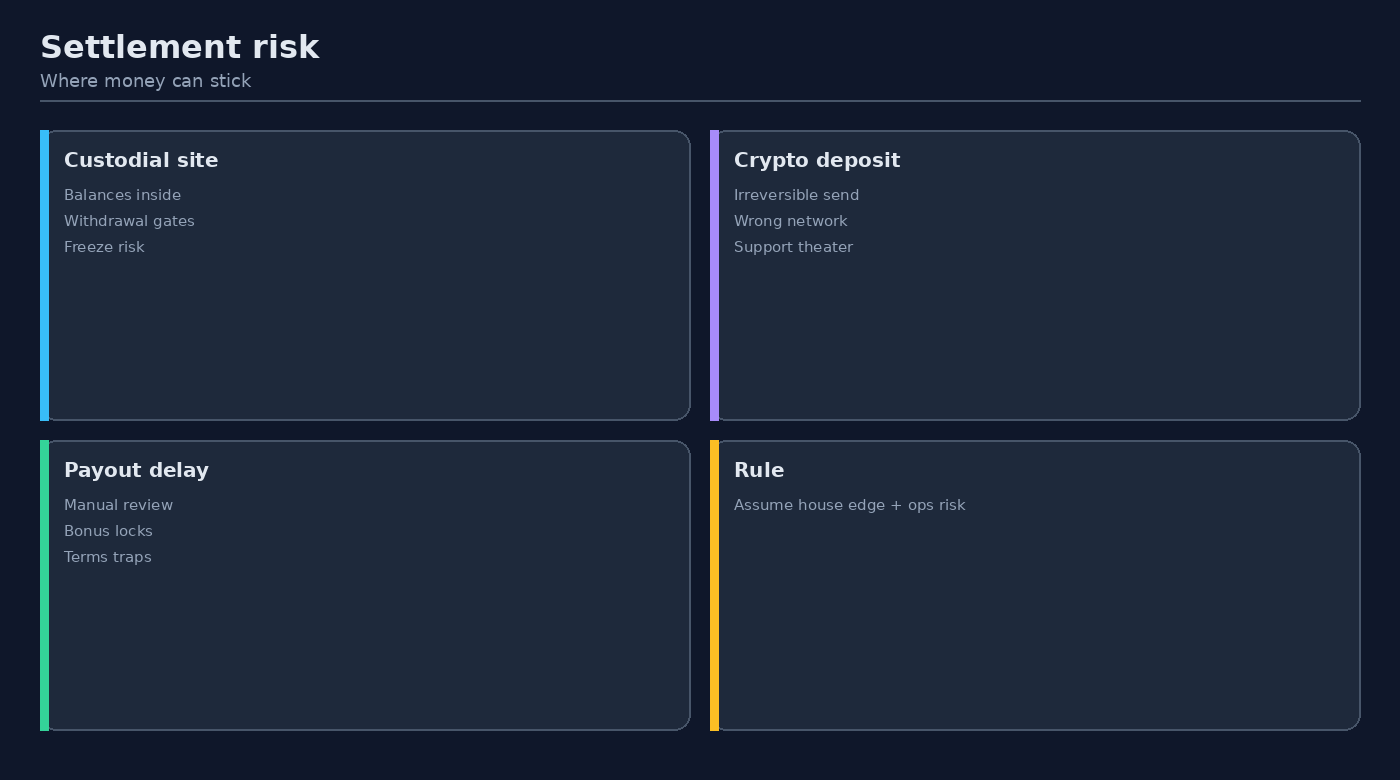
Bets, payouts, escrow, bridges add counterparties. Read them as high-risk settlement (same lens as Ch. 13): caps and circuit breakers; independent audits and scope; mixed custody; withdrawals that depend on a single operator’s manual release.
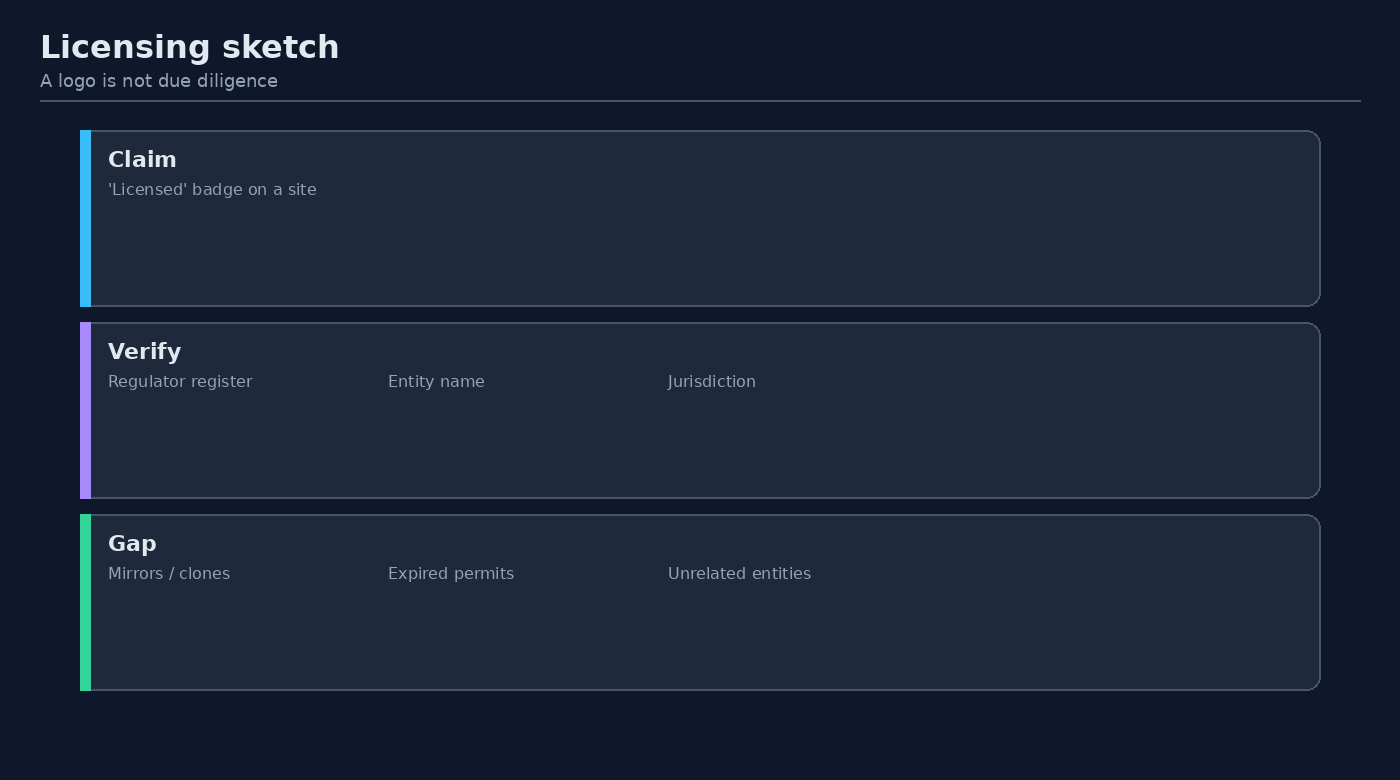
Licensing (AU high-level sketch)
Crypto exchange registration and gambling licenses are different regimes. SCDO’s public AUSTRAC DCE / AFCA materials are exchange-operator disclosure context — not “casino license, gamble freely.” Local gambling ads/age rules can be strict.
Verify: scdo.com.au/compliance.html and regulator pages. No evasion guides here.
SCDO games / ledger angle (restrained)
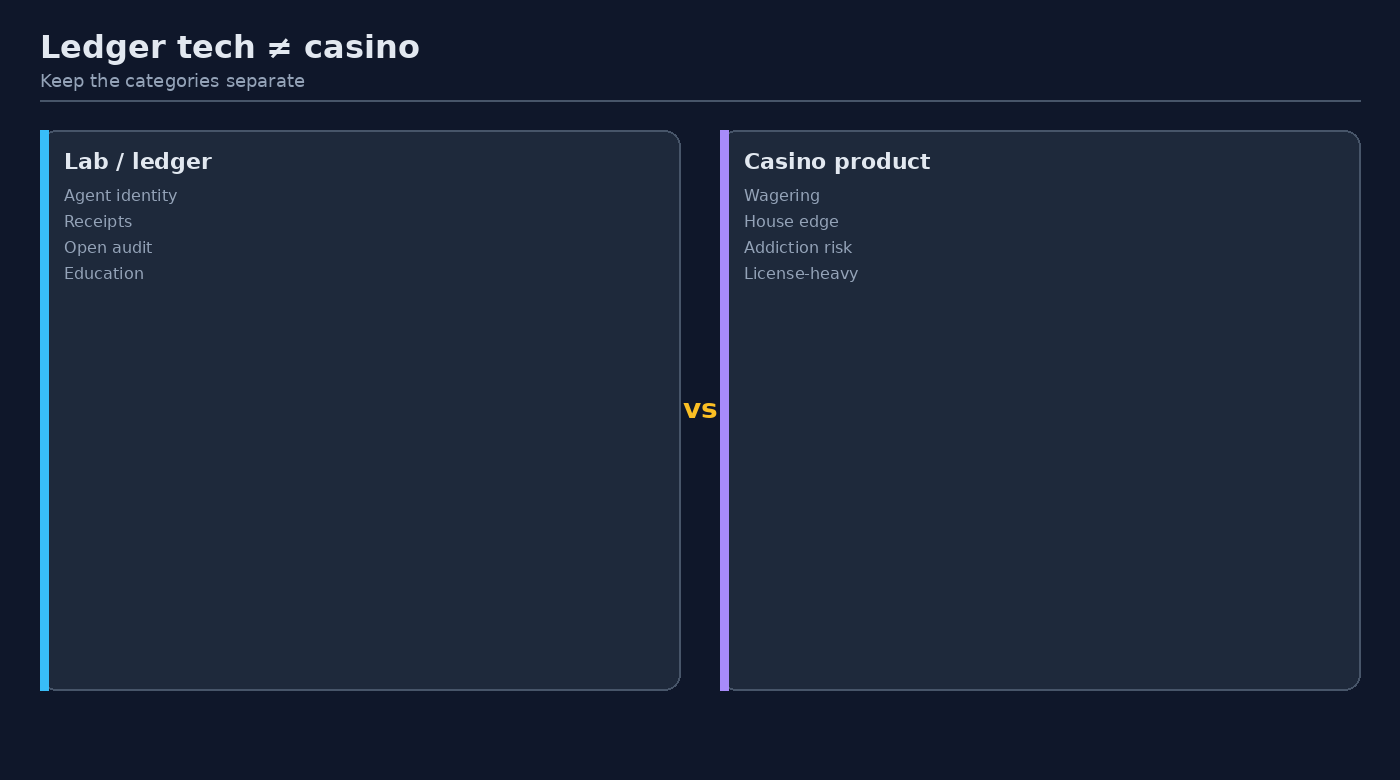
If the site shows game-facing experiments or ledger features, read them as verifiable-record / permission demos under local law. Agent Ledger is agent bookkeeping—not a casino backend. Settle nests / payment shells are identity, heartbeat, and micropay intuition—not “deposit channel” copy.
If public education and trust pages stress education, compliance disclosure, and risk, read them literally; do not hallucinate a playable partner list from tech nouns.
Red-line list
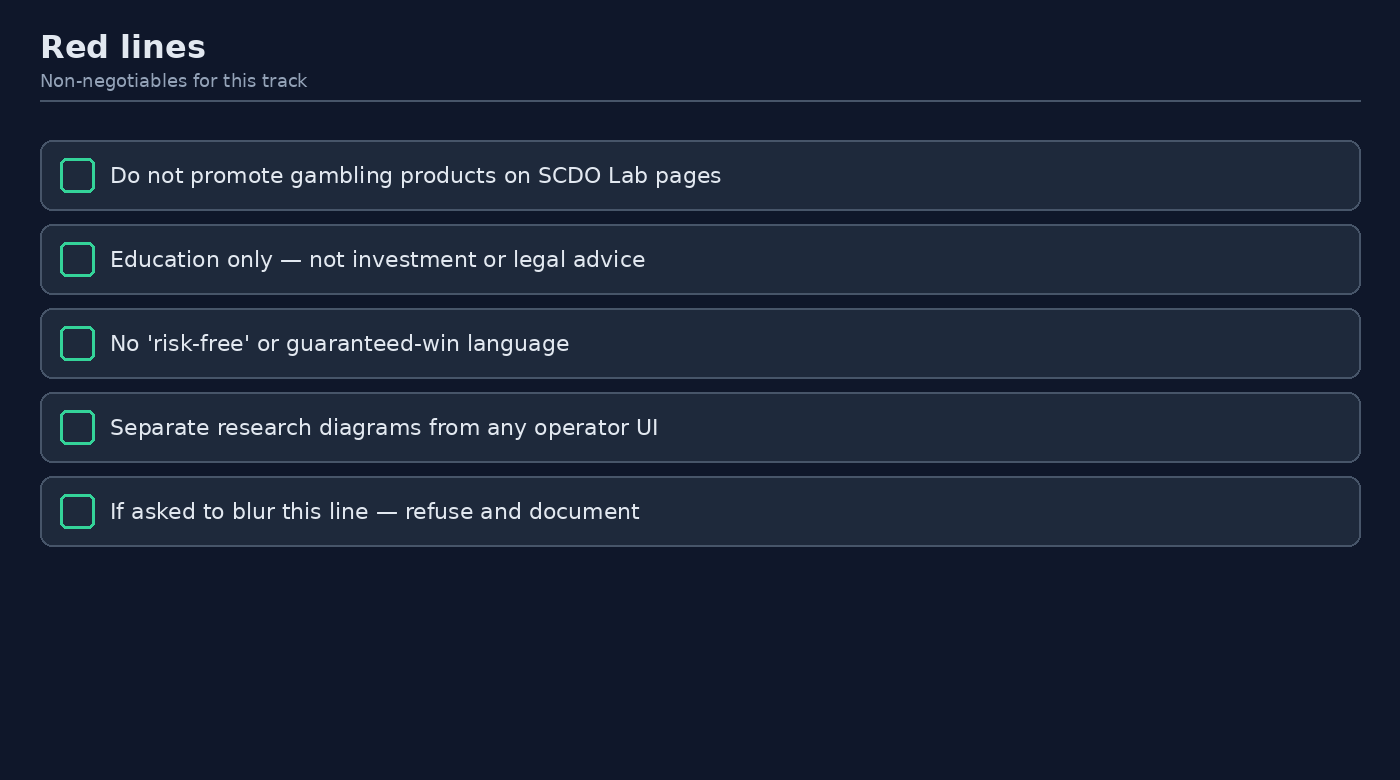
- Do not teach gambling or funnel players to casinos.
- Do not present tech demos as playable partners.
- No evasion guides for geo/KYC/age rules.
- Minors / banned jurisdictions: leave.
- Do not translate “verifiable” into “guaranteed win.”
- Do not translate exchange registration into a gambling license.
Mini case (teaching)
A classmate sees “on-chain dice, absolutely fair, daily profit” links. Against this chapter: no independent audit scope, mutable frontend, withdrawals via “support.” Even with a commit-reveal screenshot, they leave. Success metric for this chapter: knowing when to leave.
Short quiz
- Does a math commitment make play legal?
- Does open-source code prove the frontend is honest?
- Is AUSTRAC DCE a casino license?
- Is Agent Ledger a casino backend?
Sketch: (1) No. (2) No. (3) No. (4) No.
Takeaways
- De-noise fairness marketing; treat settlement as high risk; localize compliance.
- SCDO-related capabilities = verifiable records / permission demos—not casino ads.
- Red lines beat curiosity.
- Return to verification and safety habits (Ch. 9–13).
Disclaimer
Educational original — not investment, legal, or tax advice; not a gambling invitation. Obey local law.
Chapter wrap
Treat “verifiable” as an engineering and evidence habit, not a marketing halo. Continue by rereading security and SCDO chapters, and using primary sources only.
(Chapter 14 · Provable fairness / tech red lines · SCDO Lab)